Article | Intelligent Investment
Business Insights | Beyond the Noise: What’s Next for Australia’s Property Cycle
How resilience and recovery are driving positive momentum.
July 17, 2026
Listen to the full podcast episode
Click Here
Rising interest rates, inflation, geopolitical uncertainty and the influence of AI. The negative takes on the state of Australia’s property landscape can seem loud. But from CBRE’s Global Head of Research Dr Henry Chin’s perspective, the fundaments remain the same when you look beyond the noise to see the real opportunities and risks.
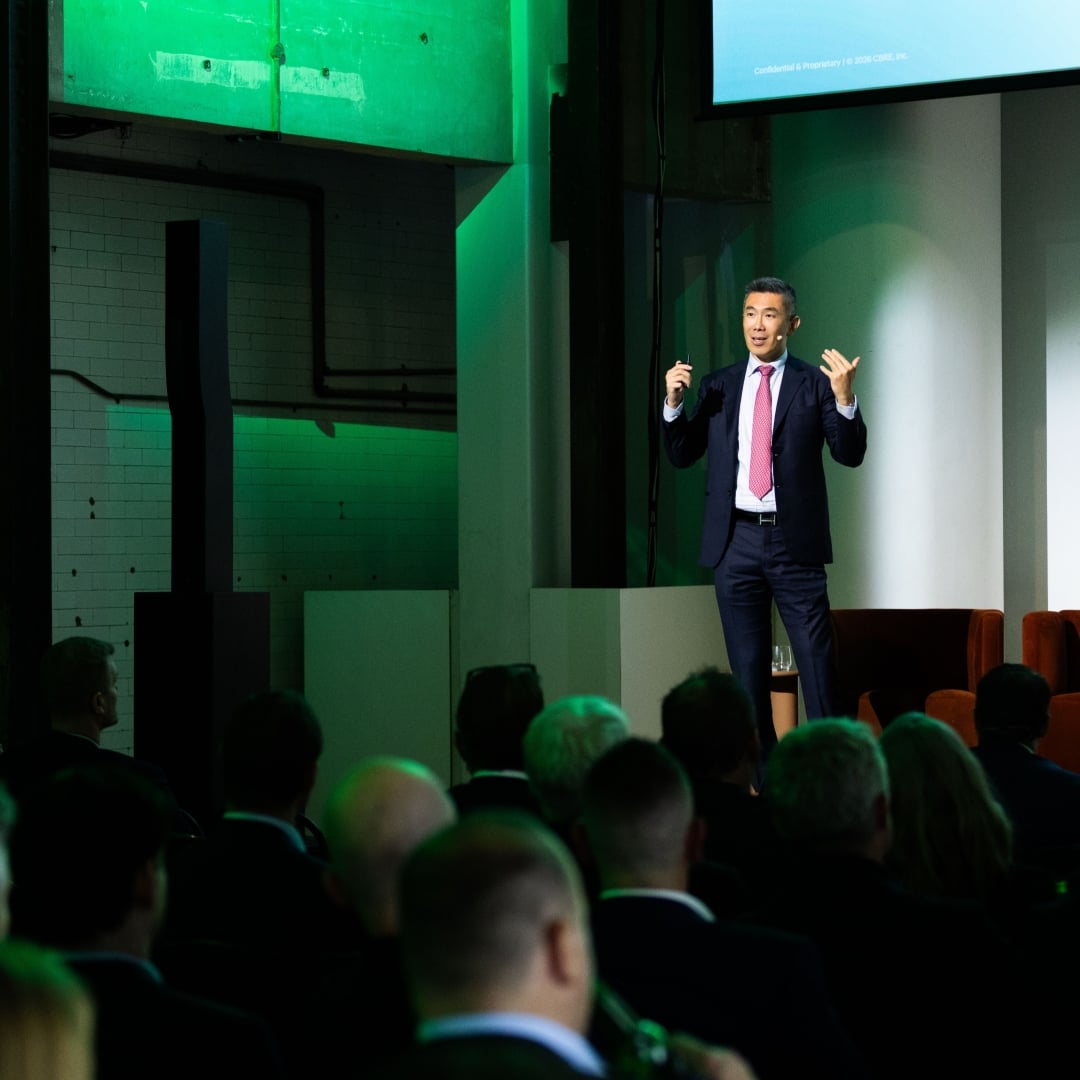
An experienced real estate strategist, Henry regularly shares his insights with clients and journalists and is a frequent presenter at academic and industry conferences. On a recent trip to Australia, he joined a special live recording of CBRE’s Talking Property podcast to share his views on asset pricing, global capital flows and what’s driving the next property cycle.
“Twenty months ago, when I moved to the US, I was very excited,” he explained. “Interest rates were coming down, the economy was in recovery, and real estate should recover as well. I thought my life would be relatively easy. But then we had the trade war, the tariffs, conflict and now also, AI can replace me at some point.
“All that noises is making my life a lot more challenging but a lot more exciting as well. If you're looking at real estate performance 2025 was resiliently strong for our business and real estate. I think that momentum is continuing for commercial real estate spaces in 2026. We might see some speed bumps, but nevertheless, recovery is on the way,” he added.
“When I talk to global capital allocators the number one thing people want to look at is repricing. Real estate is all about cyclical investment, you’ve got to play the cycle. Given the current situation we are in now, I have to say, the US is number one for investment because the US has repriced so substantially,” he said.
“If you look at Asia Pacific, people want to invest into Japan, Australia, India, Korea, Hong Kong, and Singapore. Right now, within the Asia Pacific market, all the money is going to Japan. In order for global investors to buy in Australia, we need to see more repricing and we need to see more rental growth. Unfortunately, it's not enough just yet. Once we've been through the cycle, I think you're going to see more of the global capital coming to Australia.”
“I think retail is coming from zero and is on the way to hero,” he said.
“Based on our forecast globally, retail and offices are outperforming the other asset classes. Most retail and offices had a stronger total return from stronger rental growth. We are seeing flight to quality with retailers in expansionary mode, they want to look at the prime stock which is in limited supply.”
Henry noted creating experiences for customers to elevate the shopping experience was becoming more common in Australia. Offering dining, experiential installations including art, or complementary services like gyms to keep customers in the shopping centre for longer is a differentiator.
“Always remember real estate is a function of demand and supply. Demand is weakening because of the volatility we've been through but globally there is just not enough supply in office, retail, industrial logistics. So, once we are back to the recovery track, there’s only one way to go - price is going to go up and vacancy is going to come down.”
For occupiers, the message is to act while negotiating power remains. For investors, constrained supply should prompt a more cyclical view of sectors that have been out of favour, particularly office and retail.
Looking beyond the immediate recovery cycle, Henry said structural shifts, including demographic change, ageing populations and evolving consumer behaviour, will continue to create new requirements for real estate.
Listen to the full podcast episode for more of Henry’s insights about asset pricing, global capital flows and what’s driving the next property cycle.
An experienced real estate strategist, Henry regularly shares his insights with clients and journalists and is a frequent presenter at academic and industry conferences. On a recent trip to Australia, he joined a special live recording of CBRE’s Talking Property podcast to share his views on asset pricing, global capital flows and what’s driving the next property cycle.
Resilience and Recovery
For Henry, despite the disruptions, real estate is proving its resilience and is entering a new phase of recovery, with limited supply, further repricing, and stronger demand for quality assets set to define the next market cycle.“Twenty months ago, when I moved to the US, I was very excited,” he explained. “Interest rates were coming down, the economy was in recovery, and real estate should recover as well. I thought my life would be relatively easy. But then we had the trade war, the tariffs, conflict and now also, AI can replace me at some point.
“All that noises is making my life a lot more challenging but a lot more exciting as well. If you're looking at real estate performance 2025 was resiliently strong for our business and real estate. I think that momentum is continuing for commercial real estate spaces in 2026. We might see some speed bumps, but nevertheless, recovery is on the way,” he added.
Global Capital Flows
Looking at capital flows, Henry says global investors are focused on repricing and this is impacting how they view Australia and New Zealand compared to other markets like the US.“When I talk to global capital allocators the number one thing people want to look at is repricing. Real estate is all about cyclical investment, you’ve got to play the cycle. Given the current situation we are in now, I have to say, the US is number one for investment because the US has repriced so substantially,” he said.
“If you look at Asia Pacific, people want to invest into Japan, Australia, India, Korea, Hong Kong, and Singapore. Right now, within the Asia Pacific market, all the money is going to Japan. In order for global investors to buy in Australia, we need to see more repricing and we need to see more rental growth. Unfortunately, it's not enough just yet. Once we've been through the cycle, I think you're going to see more of the global capital coming to Australia.”
Retail Rebound
As a self-confessed shopaholic, Henry says the rebound in investor interest in Australia’s retail sector is also playing out on the global stage along with a resurgence of office.“I think retail is coming from zero and is on the way to hero,” he said.
“Based on our forecast globally, retail and offices are outperforming the other asset classes. Most retail and offices had a stronger total return from stronger rental growth. We are seeing flight to quality with retailers in expansionary mode, they want to look at the prime stock which is in limited supply.”
Henry noted creating experiences for customers to elevate the shopping experience was becoming more common in Australia. Offering dining, experiential installations including art, or complementary services like gyms to keep customers in the shopping centre for longer is a differentiator.
Shortage of supply
A defining feature of the current cycle is the shortage of new supply across the office, retail and industrial and logistics markets. Henry said this dynamic will become increasingly important as demand recovers.“Always remember real estate is a function of demand and supply. Demand is weakening because of the volatility we've been through but globally there is just not enough supply in office, retail, industrial logistics. So, once we are back to the recovery track, there’s only one way to go - price is going to go up and vacancy is going to come down.”
For occupiers, the message is to act while negotiating power remains. For investors, constrained supply should prompt a more cyclical view of sectors that have been out of favour, particularly office and retail.
Looking beyond the immediate recovery cycle, Henry said structural shifts, including demographic change, ageing populations and evolving consumer behaviour, will continue to create new requirements for real estate.
Listen to the full podcast episode for more of Henry’s insights about asset pricing, global capital flows and what’s driving the next property cycle.
Talking Property with CBRE
Showcasing unique insights, perspectives and potential through thought provoking conversations amongst our subject matter experts and industry leading guests.
